Volver al catálogo

Cocaína

Psicoestimulantes

methyl (1R,2R,3S,5S)-3-benzoyloxy-8-methyl-8-azabicyclo[3.2.1]octane-2-carboxylate

Fórmula

C17H21NO4

Peso mol.

303.35

PubChem

446220

Estructura molecular

Estructura molecular de Cocaína

Efectos

Euforiaenergíaalertavasoconstricción cerebraldaño neurológico y cardiovascularriesgo de adicción.

Mecanismo de acción

Cocaine produces anesthesia by inhibiting excitation of nerve endings or by blocking conduction in peripheral nerves. This is achieved through reversible binding and inactivation of sodium channels. Sodium influx through these channels is necessary for depolarization of nerve cell membranes and subsequent propagation of impulses along the nerve course. Cocaine is the only local anesthetic with vasoconstrictor properties. This results from its blockade of norepinephrine reuptake in the autonomic nervous system. Cocaine differentially binds to dopamine, serotonin, and norepinephrine transporter proteins and directly prevents the reuptake of dopamine, serotonin, and norepinephrine in presynaptic neurons. Its effect on dopamine levels is most responsible for cocaine's addictive property. The presence and function of CB(2) cannabinoid receptors in the brain have been subjects of much debate. /The researchers/ found that systemic, intranasal, or local intra-accumbens administration of JWH133, a selective CB(2) receptor agonist, dose-dependently inhibited intravenous cocaine self-administration, cocaine-enhanced locomotion, and cocaine-enhanced accumbens extracellular dopamine in wild-type and CB(1) receptor knockout (CB(1)(-/-), also known as Cnr1(-/-)) mice, but not in CB(2)(-/-) (Cnr2(-/-)) mice. This inhibition was mimicked by GW405833, another CB(2) receptor agonist with a different chemical structure, and was blocked by AM630, a selective CB(2) receptor antagonist. Intra-accumbens administration of JWH133 alone dose-dependently decreased, while intra-accumbens administration of AM630 elevated, extracellular dopamine and locomotion in wild-type and CB(1)(-/-) mice, but not in CB(2)(-/-) mice. Intra-accumbens administration of AM630 also blocked the reduction in cocaine self-administration and extracellular dopamine produced by systemic administration of JWH133. These findings suggest that brain CB(2) receptors modulate the rewarding properties of cocaine

Vida media

1 hour The observed half-life depends on the route of administration, dose, and individual subject. It is on the order of 0.7 to 1.5 hours. After oral administration, it appears to be 0.8 hours, nasal administration, 1.25 hours, parenteral administration 0.7 to 0.9 hours. Benzoylecgonine and ecgonine methyl ester, the major metabolites of cocaine, have half-lives of 5-8 hours and 3.5-6 hours, respectively. /Cocaine metabolites/ Half-life is a very important parameter for estimating the time required to eliminate the drug from the body. It takes one half-life for plasma levels to fall to half their original level. In the case of cocaine, it takes 1.5 hr for cocaine plasma levels to fall from 102 ng/mL. This is the same time needed for concentrations to fall from 51 ng/mL to 25.5 ng/mL. In five half-lives (7.5 hr) the plasma concentration of cocaine decreased from 102 ng/mL to 3.1 ng/mL, which is 3% of the original drug in the body. Almost all the drug (97%) will be eliminated in five half-lives. To reach a certain drug level, an additional half-life will be required if the dose is doubled. For example, if cocaine is administered at a dose of 40 mg, it will take two half-lives to reach the level of 51 ng/mL and six half-lives to reach the level of 3.1 ng/mL. The biological half-life of cocaine is 0.5 to 1.5 hours.

Toxicidad

IDENTIFICATION AND USE: Cocaine is a semisynthetic drug obtained from ecgonine, a product of the saponification of coca alkaloids. Free base cocaine and cocaine hydrochloride are white solid crystals. Street cocaine used by addicts may be mixed with amphetamines, antihistamines, benzocaine, inositol, lactose, lidocaine, mannitol, opioids, phencyclidine, procaine, sugars, tetracaine, and sometimes arsenic, caffeine, quinidine, and even flour or talc. Cocaine hydrochloride has very limited use for anesthesia. Cocaine is a Schedule II Controlled Substance. HUMAN STUDIES: The target organs are the central nervous system (CNS) and cardiovascular system. Cocaine abuse leads to strong psychological dependence. At low doses, acute intoxication causes euphoria and agitation. Higher doses cause hyperthermia, nausea, vomiting, abdominal pain, chest pain, tachycardia, ventricular arrhythmia, hypertension, extreme anxiety, agitation, hallucination, and mydriasis. These may be followed by CNS depression with irregular breathing, convulsions, coma, cardiac disturbances, collapse, and death. Chronic intoxication produces euphoria, psychomotor agitation, suicidal ideation, anorexia, weight loss, hallucinations, and mental deterioration. A withdrawal syndrome may occur with severe psychiatric effects (euphoria, depression). Cocaine causes hyperthermia as a result of two mechanisms: increased muscle activity and a direct effect on thermal regulatory centers. The visceral effects on liver and kidney are due to the dopaminergic action of cocaine, or its metabolites, or to impurities. The abrupt increase in intraalveolar pressure may cause alveolar rupture and pneumomediastinum. Rhabdomyolysis occurs as a result of several different mechanisms: direct effect on muscle and muscle metabolism, tissue ischemia, the effects of drugs taken with cocaine, such as alcohol and heroin. The main effects of cocaine are the result of its sympathetic action: cocaine prevents reuptake

Farmacología

Cocaine is a local anesthetic indicated for the introduction of local (topical) anesthesia of accessible mucous membranes of the oral, laryngeal, and nasal cavities. Drugs that block nerve conduction when applied locally to nerve tissue in appropriate concentrations. They act on any part of the nervous system and on all types of nerve fiber. In contact with a nerve trunk, these anesthetics can cause both sensory and motor paralysis in the innervated area. Their action is completely reversible. (From Gilman AG, et. al., Goodman and Gilman's The Pharmacological Basis of Therapeutics, 8th ed) Nearly all local anesthetics act by reducing the tendency of voltage-gated sodium channels to activate. Drugs used to cause constriction of blood vessels. Drugs that block the transport of DOPAMINE into axon terminals or into storage vesicles within terminals. Most ADRENERGIC UPTAKE INHIBITORS also inhibit dopamine reuptake. S - Sensory organs

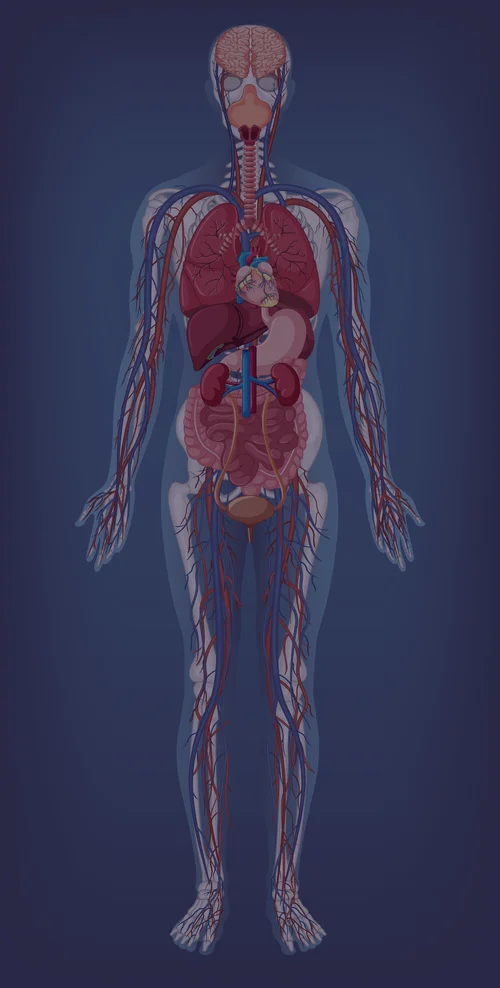
Diagrama corporal

CerebroPulmonesCorazónHígadoRiñonesTracto GI
Vida media

1 hour

Tiempo al pico

Nasal: 15-20 minutos, Oral: 60-90 minutos

Duración

30-60 minutos (nasal), 60-90 minutos (oral)

Inicio

Nasal: 1-3 minutos, Oral: 30-45 minutos, IV: segundos

Biodisponibilidad

Nasal: ~60-80%, Oral: ~33%, IV: 100%

Metabolismo

Hígado

Excreción

Renal (metabolitos: benzoilecgonina 5-8h, ecgonina metil éster 3.5-6h)

Vol. distribución

1.2-3.0 L/kg

Timeline farmacocinético

1h2h3h4hPico 18 min
InicioNasal: 1-3 minutos, Oral: 30-45 minutos, IV: segundos
PicoNasal: 15-20 minutos, Oral: 60-90 minutos
Duración30-60 minutos (nasal), 60-90 minutos (oral)

Riesgos para la salud — Calculadora de dosis

0.00 mgSin efecto
20 mg
50 mg
100 mg
200 mg
300 mg
Cardiovascular
Corto plazo
Infarto de miocardioArritmias letalesHipertensión severaAccidente cerebrovascular
Largo plazo
CardiomiopatíaEnfermedad coronaria prematuraAneurismas cerebrales
Neurológico
Corto plazo
ConvulsionesComaHipertermiaAccidente cerebrovascular
Largo plazo
Daño cognitivoMicroisquemias cerebralesDeterioro neurológico
Hepático
Corto plazo
Hepatotoxicidad agudaNecrosis hepática
Largo plazo
Daño hepático crónicoDisfunción metabólica
Renal
Corto plazo
RabdomiólisisInsuficiencia renal aguda
Largo plazo
Enfermedad renal crónicaDaño tubular
Psiquiátrico
Corto plazo
PsicosisAgitación extremaAlucinacionesIdeación suicida
Largo plazo
Adicción severaDepresiónDeterioro mentalSíndrome de abstinencia
Respiratorio
Corto plazo
PneumomediastinoEdema pulmonarDepresión respiratoria
Largo plazo
Fibrosis pulmonarBarotrauma crónico

Advertencias

  • Alto potencial de adicción desde el primer uso
  • Riesgo letal con cualquier dosis
  • Efectos impredecibles por adulterantes
  • No existe dosis segura

Combinaciones peligrosas

Alcohol (cocaetileno)Depresores del SNCOtros estimulantesIMAOAntidepresivos tricíclicos

Descripción

La cocaína es un potente estimulante del sistema nervioso central que actúa bloqueando la recaptación de dopamina, serotonina y norepinefrina, lo que aumenta las concentraciones de estos neurotransmisores y genera una intensa sensación de euforia y energía. Sin embargo, su uso crónico está asociado con graves riesgos para la salud, incluyendo daño cardiovascular, neurovasculatura reducida y adicción severa. Estudios han demostrado que la cocaína disminuye el flujo sanguíneo cerebral, contribuyendo a microisquemias y daño cerebral a largo plazo.

Referencias

1. Neurovascular effects of cocaine: relevance to addiction (2023). Frontiers in Pharmacology. 2. Cocaine-induced cerebral blood flow decrease. Journal of Neuropsychopharmacology (2021).

Datos farmacológicos obtenidos de PubChem (CID: 446220)NIH National Library of Medicine

Evidencia científica y ensayos clínicos

Managing acute stimulant intoxication in ambulatory settings: a protocol-driven case report.

Tilhou AS et al. · The American journal of drug and alcohol abuse · 2026

PMID: 41879470

Tirzepatide attenuates mesolimbic cocaine-evoked dopamine levels and reduces cocaine taking, motivation and seeking behaviours in male rodents.

Edvardsson CE et al. · EBioMedicine · 2026

PMID: 41875498

Impact of Cannabis and Cannabis Legalization on US Atrial Septal Defect Rates.

Reece AS et al. · Journal of xenobiotics · 2026

PMID: 41874114

Comparison of the treatments in crack use disorder : A Systematic Review.

Flory Samartino JM et al. · European addiction research · 2026

PMID: 41871216

Outburst of serotype 4 IPD after COVID-19 is driven by ST15063/GPSC162 lineage associated with high-risk behaviors and greater virulence linked to influenza H3N2 virus coinfection and cigarette smoke.

Pérez-García C et al. · medRxiv : the preprint server for health sciences · 2026

PMID: 41867191

Smartphone-assisted lateral flow nanosensor for the selective detection of GHB in urine.

Garrido E et al. · Biosensors & bioelectronics · 2026

PMID: 41861452

Attitudes toward tobacco-free and cannabis-free policies among residents in permanent supportive housing who use tobacco, cannabis, and other substances.

Neyazi N et al. · Addictive behaviors reports · 2026

PMID: 41858814

A single extinction-based treatment with N-Acetylcysteine produces long-term reduction in cocaine relapse.

Huang S et al. · Translational psychiatry · 2026

PMID: 41856984

The efficacy and safety of cannabinoids for the treatment of mental disorders and substance use disorders: a systematic review and meta-analysis.

Wilson J et al. · The lancet. Psychiatry · 2026

PMID: 41856154

The wake of addiction: Pharmacological strategies for sleep disturbances in stimulant use disorders, a systematic review.

Bourtin IG et al. · Drug and alcohol dependence · 2026

PMID: 41855890