Alcohol
Psicodepresoresethanol
Estructura molecular
Efectos
Mecanismo de acción
Ethanol affects neurons in the brain in several ways. It alters their membranes as well as their ion channels, enzymes and receptors. Alcohol also binds directly to acetylcholine, serotonin, GABA and NMDA receptors for glutamate. The sedative effects of ethanol are mediated by binding to GABA receptors and glycine receptors (alpha 1 and alpha 2 subunits). It also inhibits NMDA receptor function. In its role as an anti-infective, ethanol acts as an osmolyte or dehydrating agent that disrupts osmotic balance across cell membranes. ... Ethanol is known to affect a large number of membrane proteins involved in signaling pathways such as neurotransmitter receptors, enzymes and ion channels, and there is extensive evidence that ethanol interacts with a variety of neurotransmitters. The main actions of ethanol involve potentiating the inhibitory effects of gamma-aminobutyric acid (GABA) at GABAa receptors and blocking the N-methyl-D-aspartate (NMDA) subtype of glutamate, an excitatory amino acid (EAA) receptor. Animal studies indicate that acute effects of ethanol result from competitive inhibition of glycine binding to the NMDA receptor and disruption of glutamatergic neurotransmission by inhibiting NMDA receptor response. Persistent glycine antagonism and attenuation of glutamatergic neurotransmission by chronic ethanol exposure results in ethanol tolerance by potentiating EAA neurotransmission and NMDA receptor upregulation. The latter appears to involve selective increases in NMDA R2B subunit concentrations and other molecular changes in specific brain loci. Abrupt ethanol withdrawal thus produces a hyperexcitable state leading to ethanol withdrawal syndrome and excitotoxic neuronal death. GABA-mediated inhibition, which normally acts to limit excitation, is removed during ethanol withdrawal syndrome and further intensifies this excitation. Additionally, NMDA receptors function to inhibit rel
Vida media
... Blood concentrations of ethanol and methanol were determined indirectly through analysis of expired alveolar air. In the morning when blood ethanol dropped below the Km of hepatic alcohol dehydrogenase (ADH) of approximately 100 mg/L (2.2 mM), the half-life of ethanol disappearance was 21, 22, 18 and 15 min. in 4 test subjects respectively. ...
Toxicidad
The CIR Expert Panel concluded that Denat. Alcohol denatured with t-Butyl Alcohol, Denatonium Benzoate, Diethyl Phthalate, or Methyl Alcohol are safe in the practices of use and concentration as described in this safety assessment, and that Denatonium Benzoate is safe as a denaturant. The CIR Expert Panel concluded that available data are insufficient to support the safety of Denat. Alcohol denatured with Quassin, Brucine, and Brucine Sulfate in cosmetic products, and that available data are insufficient to support the safety of Quassin, Brucine, and Brucine Sulfate as denaturants. Ingredients for which data are insufficient and their use in cosmetics is not supported IDENTIFICATION AND USE: Ethanol is a clear, colorless, and highly mobile liquid. It is used in alcoholic beverages in appropriate dilutions, and as a reagent in synthetic organic chemistry and chromatography, as well as industrial and laboratory organic solvent. Other uses include the manufacture of denatured alcohol, pharmaceuticals (rubbing compounds, lotions, tonics, colognes), in perfumery. Octane enhancer in gasoline. Pharmaceutical aid (solvent). HUMAN STUDIES: Ethanol is a central nervous system (CNS) depressant. It potentiates the inhibitory effects of gamma-aminobutyric acid (GABA) at the GABA-A receptor and competitively inhibits glycine binding to the N-methyl-d-aspartate receptor (disrupts excitatory glutamatergic neurotransmission). Ethanol also stimulates the release of other inhibitory neurotransmitters, such as dopamine and serotonin. The most common clinical signs of ethanol toxicosis are ataxia, lethargy, vomiting and recumbency. In more severe cases, hypothermia, disorientation, vocalization, hypotension, tremors, tachycardia, acidosis, diarrhea, respiratory depression, coma, seizures and death may occur. Alcohol is directly irritating to the stomach and causes vomiting. High blood ethanol levels also stimulate emesis. The concern with vomiting during intoxication is that a
Farmacología
Alcohol produces injury to cells by dehydration and precipitation of cytoplasm or protoplasm. This explains its bactericidal and antifungal action. When alcohol is injected in close proximity to nerve tissues, it produces neuritis and nerve degeneration (neurolysis). From 90 to 98% of ethanol entering the body is completely oxidized. Ethanol is also used as a cosolvent to dissolve many insoluble drugs and to serve as a mild sedative in some medicinal formulations. Ethanol also binds to GABA, glycine, NMDA receptors and modulates their effects. Ethanol is also metabolized by the hepatic enzyme alcohol dehydrogenase. Substances used on humans and other animals that destroy harmful microorganisms or inhibit their activity. They are distinguished from DISINFECTANTS, which are used on inanimate objects. A very loosely defined group of drugs that tend to reduce the activity of the central nervous system. The major groups included here are ethyl alcohol, anesthetics, hypnotics and sedatives, narcotics, and tranquilizing agents (antipsychotics and anti-anxiety agents). Liquids that dissolve other substances (solutes), generally solids, without any change in chemical composition, such as, water containing sugar. (Grant & Hackh's Chemical Dictionary, 5th ed) LOTION
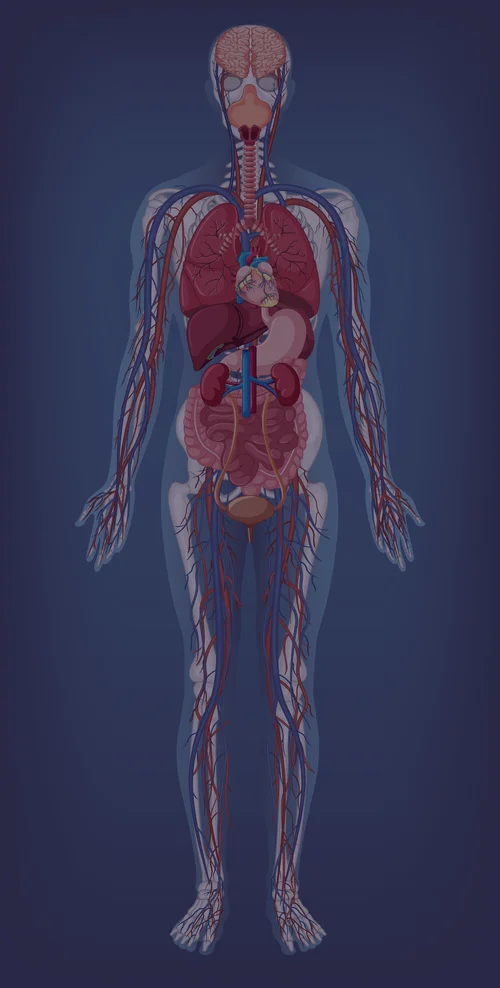
Diagrama corporal
... Blood concentrations of ethanol and methanol were determined indirectly through analysis of expi
30-90 minutos
1-6 horas dependiendo de la dosis
15-30 minutos (oral)
Oral: ~100%
Hígado
Metabolismo hepático (90-98%), pulmonar (2-10%)
0.6-0.7 L/kg
Timeline farmacocinético
Riesgos para la salud — Calculadora de dosis
Advertencias
- Síndrome de abstinencia puede causar convulsiones y muerte
- Potencial hepatotóxico severo con uso crónico
- Alto riesgo de dependencia física y psicológica
- Teratógeno - síndrome alcohólico fetal
Combinaciones peligrosas
Descripción
El alcohol es un depresor del sistema nervioso central que actúa potenciando la acción del neurotransmisor GABA y reduciendo la excitabilidad neuronal. Esto provoca sedación, relajación y, en dosis más altas, desinhibición y euforia. El uso crónico está asociado con graves problemas de salud, como cirrosis hepática, daño neurológico, enfermedades cardiovasculares y dependencia. La abstinencia del alcohol puede causar síntomas graves, como convulsiones.
Referencias
Datos farmacológicos obtenidos de PubChem (CID: 702) — NIH National Library of Medicine
Evidencia científica y ensayos clínicos
Catalysis over Isolated and Nested Lewis Acid Centers and Noble Metal Centers Anchored by Nested Lewis Acid Centers in Zeolites.
Zhang Y et al. · Accounts of chemical research · 2026
Development and optimization of mirtazapine loaded lipid-based transethosomal gel; in-vitro, ex-vivo and toxicological analysis.
Ashraf F et al. · Pakistan journal of pharmaceutical sciences · 2026
Characterization of in vitro digestion and fermentation of Polygonatum sibiricum ethanol extract and implications for antioxidant and lipid-lowering potential.
Wang X et al. · Journal of the science of food and agriculture · 2026
Ocimum tenuiflorum L. extracts attenuate polycystic ovarian syndrome in letrozole treated female Wistar rats through modulation of iNOS, COX-2, IL-1β and TNF-α.
Rashid S et al. · Journal of molecular histology · 2026
Driving impact of organic acids on microbial community dynamics and fermentation performance in Huangjiu.
Cheng S et al. · NPJ science of food · 2026
In vitro safety assessment, titanium migration analysis, and functional properties of chitosan-alginate bio-nanocomposite films with bay leaf extract and TiO₂ for sustainable chicken packaging.
Such A et al. · International journal of biological macromolecules · 2026
Crystalline mate strategy for berberine hydrochloride: solvent-polarity-tuned co-crystallization.
Liang JF et al. · Acta crystallographica Section B, Structural science, crystal engineering and materials · 2026
Mechanistic model for improved performance of mRNA-LNPs formulated under turbulent mixing conditions.
Mosesso R et al. · Journal of materials chemistry. B · 2026
Synergic Effect of Enzyme-Assisted Extraction and Natural Deep Eutectic Solvents for Bioactives Recovery in Orange Peel Waste.
Gomez-Urios C et al. · Biotechnology and applied biochemistry · 2026
BDNF restores impaired long-term potentiation of GABAergic synapses induced by chronic ethanol exposure in the VTA and attenuates reward-seeking behavior.
Xiong JW et al. · Molecular psychiatry · 2026