Volver al catálogo

Ketamina

Disociativos

2-(2-chlorophenyl)-2-(methylamino)cyclohexan-1-one

Fórmula

C13H16ClNO

Peso mol.

237.72

PubChem

3821

Estructura molecular

Estructura molecular de Ketamina

Efectos

Disociaciónanalgesiaalucinacioneseuforiaefectos antidepresivos rápidos.

Mecanismo de acción

Ketamine interacts with N-methyl-D-aspartate (NMDA) receptors, opioid receptors, monoaminergic receptors, muscarinic receptors and voltage-sensitive Ca channels. Unlike other general anesthetic agents, ketamine does not interact with GABA receptors. Long-term ketamine abuse is known to affect the lower urinary tract and produce cystitis symptoms. However, the pathophysiology and causative mechanism of changes in bladder function remain unclear. The present study aimed to investigate the existence of ketamine-induced cystitis in a rat model and characterize the underlying mechanisms. Rats were assigned to blank control, normal saline (NS), low-dose ketamine (LK, 5 mg/kg), and high-dose ketamine (HK, 50 mg/kg) groups. The two experimental groups received ketamine hydrochloride daily for 16 weeks. All rats were housed individually for urinary frequency and urine volume assessment. Urinary biomarkers were measured at different time points. Rat bladders were removed for histopathology, immunohistochemistry and western blot analysis. Ketamine-treated rats had higher urinary frequency compared to NS-treated rats at Week 16. Urinary levels of nitric oxide and antiproliferative factor were increased in ketamine-treated rats within the first 30 h after administration. After long-term ketamine administration, urinary levels of glycoprotein GP51 and potassium were decreased in HK and LK groups compared to the NS group. Ketamine-treated rats showed thickened bladder epithelial layer, increased expression of inducible nitric oxide synthase and occludin, and decreased expression of zonula occludens-1 in the bladder wall. Ketamine, or its urinary metabolites, disrupted bladder epithelial cell proliferation, resulting in defective bladder epithelial barrier. The subsequent leakage of urinary potassium causes a stress response in the bladder and provokes cystitis. Recreational ketamine abuse has been associated with the emergence of a new bladder pain syndrome

Vida media

The reported half-life in preclinical studies for ketamine is 186 min. ... The pharmacokinetics and distribution of ketamine and its biotransformation products in dogs were studied after extradural administration of ketamine at L4-5. ... The elimination half-life values of the parent drug for both biological fluids were similar (4.3 (2.96) hr and 4.6 (3.31) hr for plasma and CSF, respectively). ... The half-life is 2.5 hours in adults and 1 to 2 hours in children. beta phase half-life: 3 hours /From table/ ... After intravenous administration, ketamine concentration has an initial slope (alpha phase) lasting approximately 45 minutes with a half-life of 10 to 15 minutes. This first phase clinically corresponds to the anesthetic effect of the drug. The anesthetic action is terminated by a combination of redistribution from the CNS to slower equilibrating peripheral tissues and by hepatic biotransformation to metabolite I. This metabolite is approximately 1/3 as active as ketamine in reducing halothane requirements (MAC) in rats. The subsequent half-life of ketamine (beta phase) is 2.5 hours.

Toxicidad

IDENTIFICATION AND USE: Ketamine is a cyclohexanone derivative used as an anesthetic agent in human and veterinary procedures. Ketamine hydrochloride injection, USP is indicated as the sole anesthetic agent for diagnostic and surgical procedures that do not require skeletal muscle relaxation. HUMAN STUDIES: Ketamine is a unique anesthetic because it has both hypnotic and analgesic effects and also possible hallucinogenic side effects. The lack of cardiopulmonary depression makes the drug a popular choice for anesthesia in the prehospital setting. In recent years ketamine has been found to have anti-hyperalgesic and opioid-sparing effects, opening new ways to manage postoperative and chronic pain states. Ketamine has been used as a drug of abuse. Ketamine produces a variety of symptoms including, but not limited to, anxiety, dysphoria, disorientation, insomnia, flashbacks, hallucinations and psychotic episodes. Dependence and tolerance to ketamine are possible after prolonged administration. A withdrawal syndrome with psychotic features has been described after discontinuing long-term ketamine use. Frequent recreational ketamine users have been found to have impaired memory 3 days after their last dose, compared to infrequent users. Flashbacks have also been reported. Frequent use results in tolerance and the need to increase the dose to maintain similar effects. Respiratory depression may occur with overdose or a very rapid rate of ketamine administration, in which case supportive ventilation should be employed. Mechanical support of respiration is preferred to the administration of analeptics. ANIMAL STUDIES: Administration of ketamine hydrochloride altered the blood count of rhesus monkeys when compared to physical restraint for venipuncture. The alterations were decreases in white blood cell count, total plasma proteins and hematocrit. The decrease in white blood cell count was mainly due to a decrease in lymphocytes with a lesser decrease in

Farmacología

Ketamine is a rapidly-acting general anesthetic producing an anesthetic state characterized by profound analgesia, normal pharyngeal-laryngeal reflexes, normal or slightly enhanced skeletal muscle tone, cardiovascular and respiratory stimulation, and occasionally a transient and minimal respiratory depression. The anesthetic state produced by ketamine has been termed as "dissociative anesthesia" in that it appears to selectively interrupt association pathways of the brain before producing sensory blockade. It may selectively depress the thalamoneocortical system before significantly obtunding the more ancient brain centers and pathways (reticular-activating and limbic systems). Ketamine potentiates descending inhibitory serotonergic pathways and may exert antidepressant effects. These effects are seen at concentrations ten times lower than the concentration needed for anesthetic purposes. The effect of ketamine can be described as analgesic by preventing central sensitization in dorsal horn neurons as well as by inhibiting nitric oxide synthesis. Ketamine may present cardiovascular changes and bronchodilation. Compounds capable of relieving pain without the loss of CONSCIOUSNESS. Intravenous anesthetics that induce a state of sedation, immobility, amnesia, and marked analgesia. Subjects may experience a strong sense of dissociation from the environment. The condition produced is similar to NEUROLEPTANALGESIA, but is brought about by the administration of a single drug. (From Gilman et al., Goodman and Gilman's The Pharmacological Basis of Therapeutics, 8th ed) Drugs that bind to but do not activate excitatory amino acid receptors, thereby blocking the actions of agonists. 690G0D6V8H

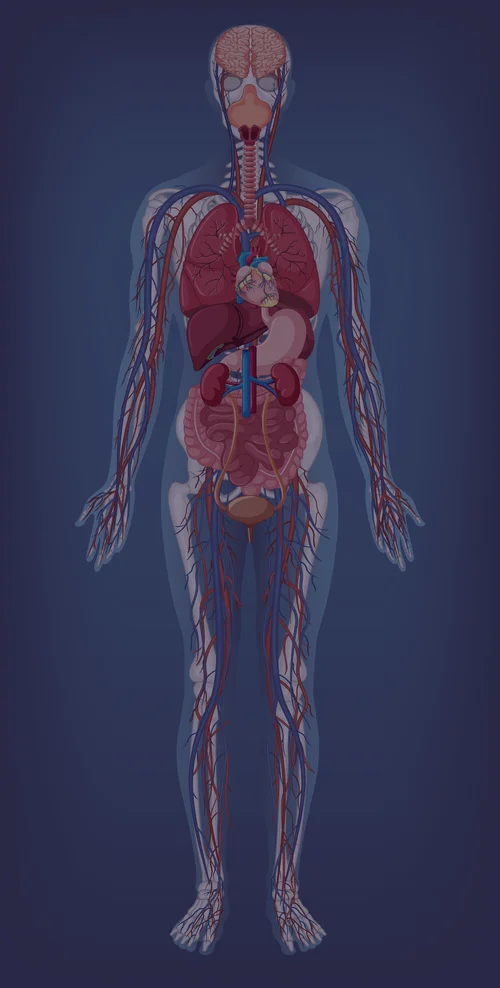
Diagrama corporal

CerebroPulmonesCorazónHígadoRiñonesTracto GI
Vida media

The reported half-life in preclinical studies for ketamine is 186 min

Tiempo al pico

IV: 1-2 minutos; IM: 5-15 minutos; Oral: 30-60 minutos

Duración

IV/IM: 1-2 horas (anestésico), efectos disociativos pueden durar 4-6 horas; Oral: 4-6 horas

Inicio

IV: 30 segundos-2 minutos; IM: 3-4 minutos; Oral: 15-30 minutos

Biodisponibilidad

IV: 100%; IM: ~93%; Oral: ~17-20%; Nasal: ~45%

Metabolismo

Hígado

Excreción

Renal (>90% como metabolitos)

Vol. distribución

3-5 L/kg

Timeline farmacocinético

1h2h3h4hPico 2 min
InicioIV: 30 segundos-2 minutos; IM: 3-4 minutos; Oral: 15-30 minutos
PicoIV: 1-2 minutos; IM: 5-15 minutos; Oral: 30-60 minutos
DuraciónIV/IM: 1-2 horas (anestésico), efectos disociativos pueden durar 4-6 horas; Oral: 4-6 horas

Riesgos para la salud — Calculadora de dosis

0.00 mgSin efecto
15 mg
50 mg
100 mg
200 mg
350 mg
Cardiovascular
Corto plazo
HipertensiónTaquicardiaAumento gasto cardíaco
Largo plazo
Posible cardiotoxicidad con uso crónico
Neurológico
Corto plazo
AlucinacionesDisociación severaDesorientación
Largo plazo
Deterioro cognitivoProblemas de memoriaFlashbacks
Hepático
Corto plazo
Sobrecarga metabólica
Largo plazo
Posible hepatotoxicidad con uso prolongado
Renal
Corto plazo
DisuriaHematuria
Largo plazo
Cistitis ketamínicaFibrosis vesicalInsuficiencia renal
Psiquiátrico
Corto plazo
Episodios psicóticosAnsiedad severaDisforia
Largo plazo
DependenciaSíndrome de abstinenciaTrastornos psicóticos persistentes
Respiratorio
Corto plazo
Depresión respiratoria con sobredosis
Largo plazo
Complicaciones respiratorias raras

Advertencias

  • Alto potencial de abuso y dependencia
  • Cistitis ketamínica irreversible con uso crónico
  • Deterioro cognitivo persistente
  • Riesgo de accidentes por disociación

Combinaciones peligrosas

Depresores del SNCAlcoholBenzodiazepinasOpioidesEstimulantes (riesgo cardiovascular)

Descripción

La ketamina es un agente anestésico y analgésico disociativo que fue aprobado para uso clínico en 1970. Es un antagonista no competitivo del receptor NMDA, lo que bloquea la acción del glutamato, el principal neurotransmisor excitatorio en el cerebro. Además de sus aplicaciones en anestesia, en la última década ha cobrado interés por su potencial en el tratamiento de trastornos psiquiátricos como la depresión resistente al tratamiento y el trastorno de estrés postraumático. Su capacidad para generar efectos antidepresivos rápidos ha sido un punto clave de investigación.

Referencias

1. Zarate, C. et al. (2024). Pharmacological Reviews. 2. Medić, B. et al. (2023). MDPI.

Datos farmacológicos obtenidos de PubChem (CID: 3821)NIH National Library of Medicine

Evidencia científica y ensayos clínicos

Esketamine and postoperative cognitive dysfunction in aged mice: Role of the SIRT3/AMPK/mTOR pathway.

Wang Y et al. · Pakistan journal of pharmaceutical sciences · 2026

PMID: 41879399

[Recognising and treating depression - a practical overview of current treatment algorithms and evidence-based recommendations].

Brühl AB et al. · Therapeutische Umschau. Revue therapeutique · 2026

PMID: 41878757

Esketamine-Based Opioid-Free versus Opioid-Based Anesthesia for Recovery Quality After Laparoscopic Transabdominal Preperitoneal Repair: A Randomized Noninferiority Trial.

Liu H et al. · Drug design, development and therapy · 2026

PMID: 41878675

S-ketamine plus dexmedetomidine vs. S-ketamine plus propofol for sedation-analgesia during positioning for spinal anesthesia in older adults undergoing lower extremity fracture surgery.

Guo Y et al. · Frontiers in neurology · 2026

PMID: 41878200

Ultrasound-guided transversus abdominis plane block in cesarean delivery: a randomized trial of ketamine versus neostigmine as bupivacaine adjuvants.

Maaly AM et al. · Journal of anesthesia, analgesia and critical care · 2026

PMID: 41877302

Impact of subanesthetic ketamine delivered via AmyloLipid nanovesicle (ALN)-based intranasal system on biobehavioral responses in an animal model of PTSD.

Levy G et al. · Translational psychiatry · 2026

PMID: 41876451

Cognitive Effects of Esketamine in Treatment-Resistant Depression: A Systematic Review.

Guglielmo R et al. · Journal of clinical psychopharmacology · 2026

PMID: 41873584

NADPH oxidase-1 suppression prolongs the antidepressant-like effect of ketamine.

Nakajima W et al. · Molecular psychiatry · 2026

PMID: 41872515

Ketamine-induced changes in accumbal glutamate and their association with altered states of consciousness.

Gubser LP et al. · Brain research bulletin · 2026

PMID: 41871813

Ketamine Use for ED Sedation: Pharmacologic Basis, Clinical Applications, and Safety Considerations.

Montoya S et al. · Cureus · 2026

PMID: 41869093